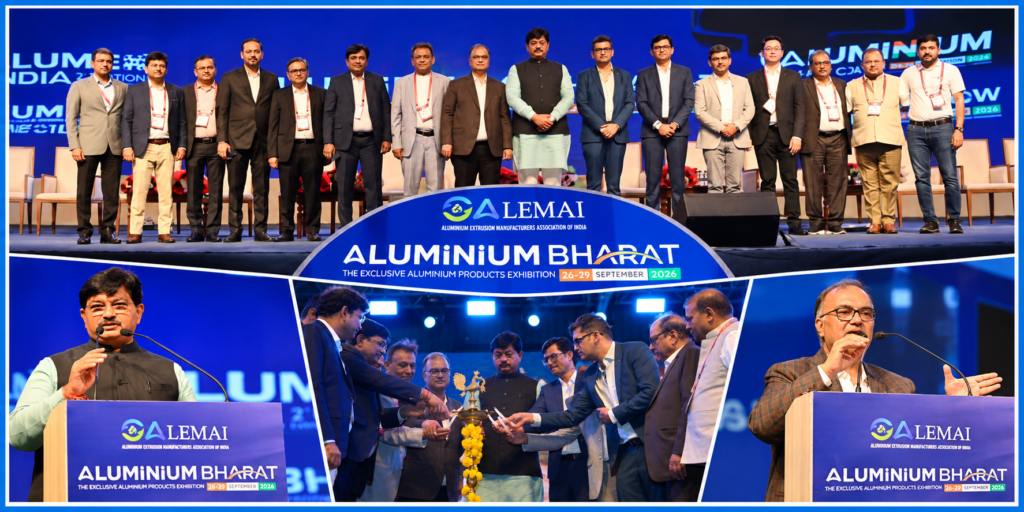
India’s Aluminium Ambitions Take Centre Stage at ALUMINIUM BHARAT 2026
Bilkul Bazaar
Ahmedabad | 26 Sept 2026
ALEMAI calls for lower input costs, tariff rationalisation and measures to boost domestic manufacturing capacity
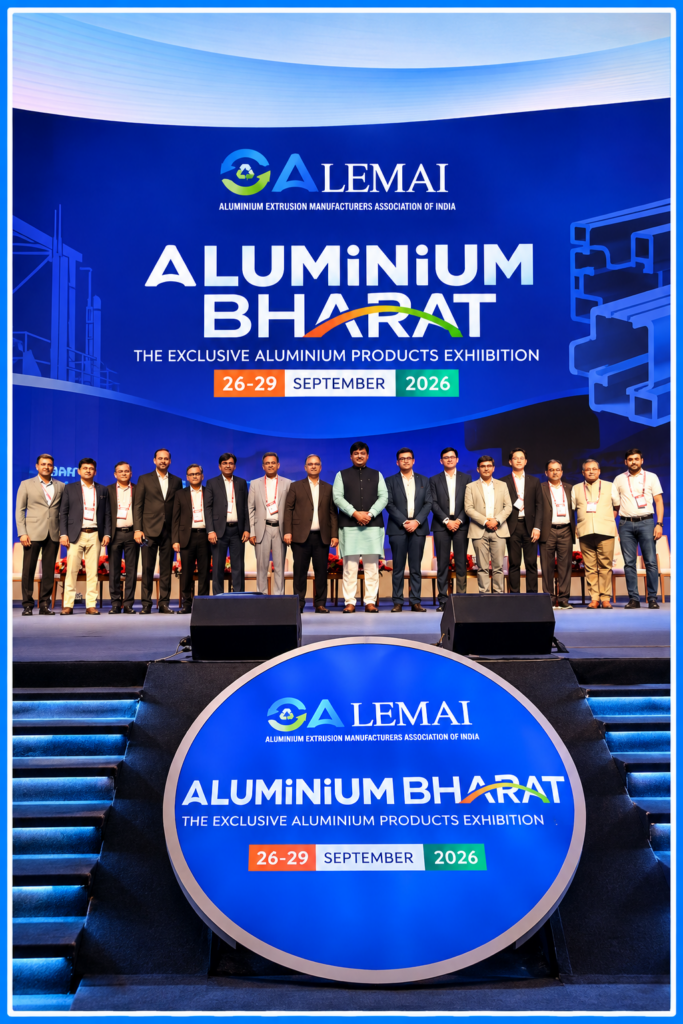
GANDHINAGAR, September 26, 2026: India’s aluminium industry has called for policy measures to improve the competitiveness of downstream manufacturers and unlock existing production capacity as ALUMINIUM BHARAT 2026 opened at the Helipad Exhibition Centre in Gandhinagar on Saturday.
Organised by the Aluminium Extrusion Manufacturers Association of India (ALEMAI), the four-day exhibition, being held from September 26 to 29 alongside ALUMEX INDIA 2026, brings together manufacturers, recyclers, technology providers, buyers, policymakers and international stakeholders from across the aluminium value chain.
500+ Exhibitors, 50,000 Visitors Expected
Spread across more than 30,000 square metres, ALUMINIUM BHARAT 2026 features over 500 exhibitors and is expected to attract more than 50,000 visitors, including international buyers and industry professionals.
The exhibition covers primary aluminium producers, extrusion and rolling manufacturers, recyclers, technology companies and downstream industries. Business meetings, technical sessions and industry interactions are focusing on technology, new applications, investment opportunities and greater domestic value addition.
Downstream Capacity Remains Underutilised
ALEMAI highlighted the gap between installed capacity and actual production in India’s aluminium extrusion industry. The industry has an estimated annual installed capacity of around 30 lakh tonnes, while current domestic production is around 10–12 lakh tonnes.
At the same time, downstream aluminium imports are estimated at 12–15 lakh tonnes annually, according to the association.
ALEMAI said addressing input costs, tariff structures and other competitiveness-related issues could help manufacturers utilise existing capacity more effectively and encourage fresh investment.
Industry Seeks Rationalisation of Tariffs
The cost of raw materials remains a key concern for downstream manufacturers. According to ALEMAI, primary aluminium such as ingots and billets attracts a standard basic customs duty of 7.5%, while aluminium scrap carries a lower basic duty.
The association has called for a review of the tariff structure, arguing that high input costs can put pressure on downstream manufacturers, particularly MSMEs.
ALEMAI has also raised concerns over tariff differences created by Free Trade Agreements, where certain downstream aluminium products may enter India at preferential or concessional rates while domestic manufacturers continue to face higher costs for key inputs.
Focus on Energy Costs and Domestic Manufacturing
Speaking at the inauguration, Jitendra Chopra, President, ALEMAI, said India has the resources, manufacturing base and technical capabilities to expand its position in value-added aluminium products.
He said the immediate opportunity was to improve utilisation of existing capacity while creating conditions for new investment, with the industry facing challenges from input costs, tariff asymmetries, energy expenses and imported downstream products.
ALEMAI is seeking a policy framework that can improve capacity utilisation, support MSMEs, attract investment and strengthen the ability of Indian manufacturers to compete in global markets.
Aluminium Demand Rising Across Key Sectors
The exhibition comes as aluminium demand continues to expand across automotive and electric mobility, renewable energy, infrastructure, construction, electrical and engineering applications.
However, manufacturers are also facing higher energy costs, volatile raw material prices, supply-chain disruptions and changing global trade conditions.
Disruptions affecting aluminium supplies from the Middle East have added to concerns over global availability, while geopolitical developments continue to influence energy and commodity markets.
India’s Aluminium Trade Gap
India’s growing demand for value-added aluminium products is also reflected in trade data cited by ALEMAI. According to a recent NITI Aayog trade analysis, India exported about $6.8 billion of aluminium and aluminium products in 2025, while imports were around $9.9 billion.
The association said a growing share of imports comprises value-added products, highlighting the scope for expanding domestic downstream manufacturing.
Four-Point Policy Agenda
ALEMAI has identified four broad areas for policy attention:
- Tariff rationalisation across raw materials and finished products
- Lower energy and financing costs for manufacturers
- Stronger domestic demand for value-added aluminium products
- Greater alignment with global trade and manufacturing trends
The association said these measures could help improve capacity utilisation, strengthen MSMEs and encourage greater domestic value addition.
Global Trade Environment Adds Pressure
The global aluminium industry is also undergoing significant changes, with trade barriers, geopolitical disruptions and shifting supply routes affecting manufacturers worldwide.
The US continues to maintain 50% Section 232 tariffs on aluminium, while disruptions in global supply chains have influenced inventories and regional premiums. These developments have increased the focus on resilient supply chains and competitive domestic manufacturing.
Focus on Recycling and Long-Term Competitiveness
The Government’s broader Aluminium Vision places emphasis on domestic value addition, recycling, resource security, low-carbon technologies and global competitiveness.
ALEMAI said ALUMINIUM BHARAT 2026 provides a platform for stakeholders across the value chain to discuss these priorities, promote technology adoption and identify opportunities for strengthening India’s aluminium manufacturing ecosystem.
ALEMAI represents more than 250 members across India’s aluminium extrusion industry. The association said the broader midstream and downstream aluminium industry has a combined annual production capacity of around 4.2 million tonnes and supports more than 10 lakh direct and indirect jobs.
Pingback: Smaller stocks stay resilient in Aug even as large caps lag: Report - Bilkul Bazaar
Pingback: Domestic tourist visits reach 428.55 crore, forex earnings from tourism hit over Rs 2.76 lakh crore - Bilkul Bazaar