
ECONOMICS IN ACTION: Why Do Vegetable Prices Rise and Fall So Quickly?
Bilkul Bazaar | Sunday Special
By Rafat Quadri
From sudden rain and crop shortages to bumper harvests, discover the economic forces that decide the price of vegetables in your market.
Have you ever bought tomatoes at ₹20 per kilogram one week, only to find them selling at ₹60 the next? Or watched onion prices fall sharply when supplies suddenly increase?
Vegetable prices can change much faster than the prices of many other products. The reason lies in a combination of supply and demand, weather conditions, transportation costs, perishability and the way agricultural markets operate.
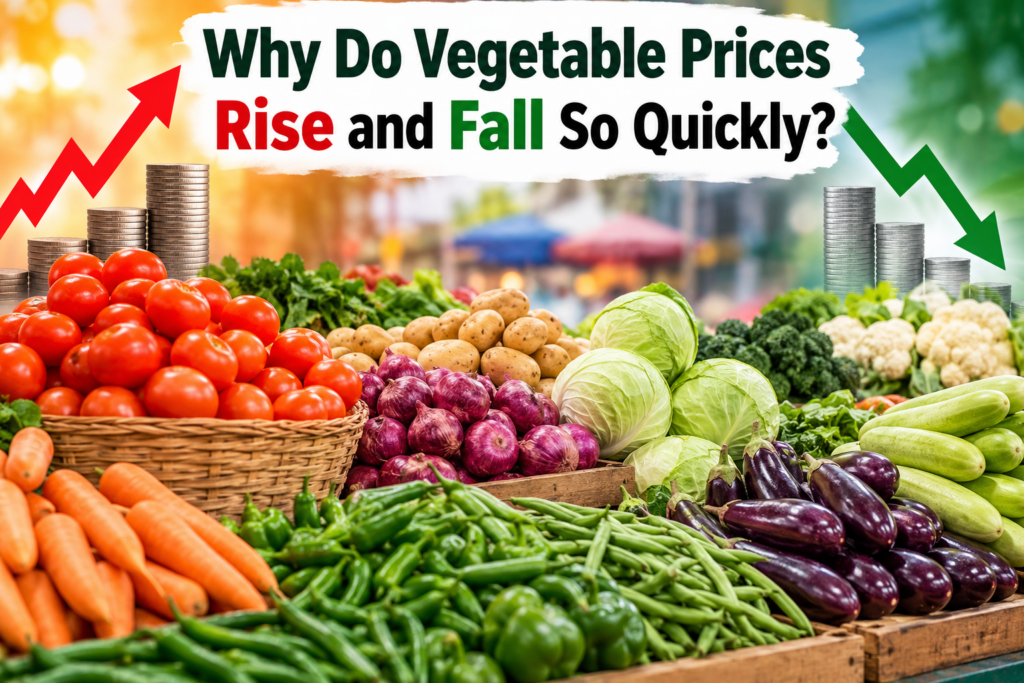
Let’s understand the economics behind these everyday price changes.
1. Supply and Demand: The Biggest Factors
The basic principle of economics is simple: prices tend to rise when demand exceeds supply and tend to fall when supply exceeds demand, assuming other factors remain broadly unchanged.
Suppose consumers and restaurants need 100 tonnes of tomatoes daily, but only 70 tonnes reach the market. Buyers compete for limited supplies, putting upward pressure on prices.
Now imagine a good harvest brings 130 tonnes to the same market. If demand does not increase proportionately, sellers may lower prices to clear their stocks.
This is why the same vegetable can be expensive during a shortage and relatively cheap during a period of abundant supply.
2. Weather Can Change Everything
Agriculture depends heavily on weather. Excessive rainfall, floods, heatwaves, droughts and unseasonal rain can damage crops, delay harvesting or disrupt transportation.
For example, heavy rainfall in a major tomato-growing region may damage crops and prevent trucks from reaching wholesale markets on time. With fewer tomatoes available, prices may rise in cities far away from the affected region.
Favourable weather can have the opposite effect. A healthy harvest increases availability and may bring prices down.
The impact also depends on how widely the crop is grown, the availability of supplies from other regions and the time needed for new crops to reach the market.
3. Vegetables Cannot Wait Forever
Unlike many manufactured products, fresh vegetables have a limited shelf life. Tomatoes soften, leafy vegetables wilt and other produce can deteriorate without suitable storage.
This creates a special economic challenge. Sellers cannot always hold their stock until prices improve.
When arrivals are high, traders may reduce prices to avoid spoilage. When supplies are low, however, there may be little produce available to meet demand.
Cold storage, better packaging and efficient supply chains can reduce wastage, although not all vegetables can be stored economically for long periods.
4. The Journey From Farm to Consumer
The price paid by a household includes more than the amount received by the farmer.
Vegetables may pass through collection centres, wholesale markets, transporters, retailers and local vendors before reaching consumers. Handling, sorting, packaging, transport, market fees and wastage can all contribute to the final price.
Fuel-price increases or traffic disruptions may raise distribution costs. A shortage of trucks or interruptions to transport can also delay deliveries and reduce the quantity reaching a market.
However, higher retail prices do not automatically mean farmers are earning more. During a glut, farmers may receive very low prices even when consumers pay considerably more because of distribution costs and losses along the supply chain.
5. Why Do Prices Differ Between Cities?
A vegetable may be affordable in one city but expensive in another.
The difference can arise from the distance between farms and markets, local weather, transport availability, storage facilities, consumer demand and the volume of vegetables arriving each day.
Cities that depend heavily on supplies from a particular growing region may be more vulnerable to disruptions there. Markets with access to several production regions may have more alternatives when one source experiences a shortage.
Local market conditions therefore matter just as much as the national picture.
6. Why Can Prices Fall So Suddenly?
Farmers often plant crops based on expected demand and previous prices. But when many farmers grow the same vegetable and their crops mature around the same time, the market can receive a sudden surge in supply.
If the quantity harvested is greater than what consumers can buy, prices may fall sharply. Perishable vegetables are particularly vulnerable because sellers have limited time to find buyers.
This can create a difficult situation: consumers may enjoy cheaper vegetables, while farmers struggle to recover cultivation, labour and transportation costs.
Such price volatility is one reason better storage, processing facilities, market information and access to multiple buyers are important for agriculture.
7. Who Wins and Who Loses?
Rapid price changes affect different groups in different ways.
- Consumers: Benefit when prices fall but face higher household expenses during shortages.
- Farmers: May earn more when prices rise, provided they have produce to sell, but can suffer when harvests flood the market.
- Traders and retailers: Face changing purchase costs, uncertain demand, spoilage risks and fluctuating margins.
- Food businesses: Restaurants, caterers and food processors may face higher operating costs when essential vegetables become expensive.
A price increase is therefore not necessarily good news for everyone in the supply chain.
The Economic Lesson
Vegetable prices demonstrate a fundamental economic principle: prices communicate information about scarcity, demand and the cost of bringing goods to market.
When supply falls, prices often rise. When supply expands faster than demand, prices often decline. Weather, transport, storage and market access can intensify or soften these movements.
The bigger lesson: Stable food prices depend not only on good harvests but also on efficient transportation, reduced wastage, reliable market information and a supply chain that connects farmers with consumers.
The next time vegetable prices change at your local market, look beyond the price tag. It may tell you a much larger story about agriculture, logistics and the working of the economy.
Note: We seek Sponsors for this column. Please connect with us at infobilkul@gmail.com