HOW IT WORKS: How Does an Electricity Smart Meter Work?
Bilkul Bazaar | Sunday Special
From measuring power consumption to sending readings automatically, smart meters are changing how electricity is monitored and billed.
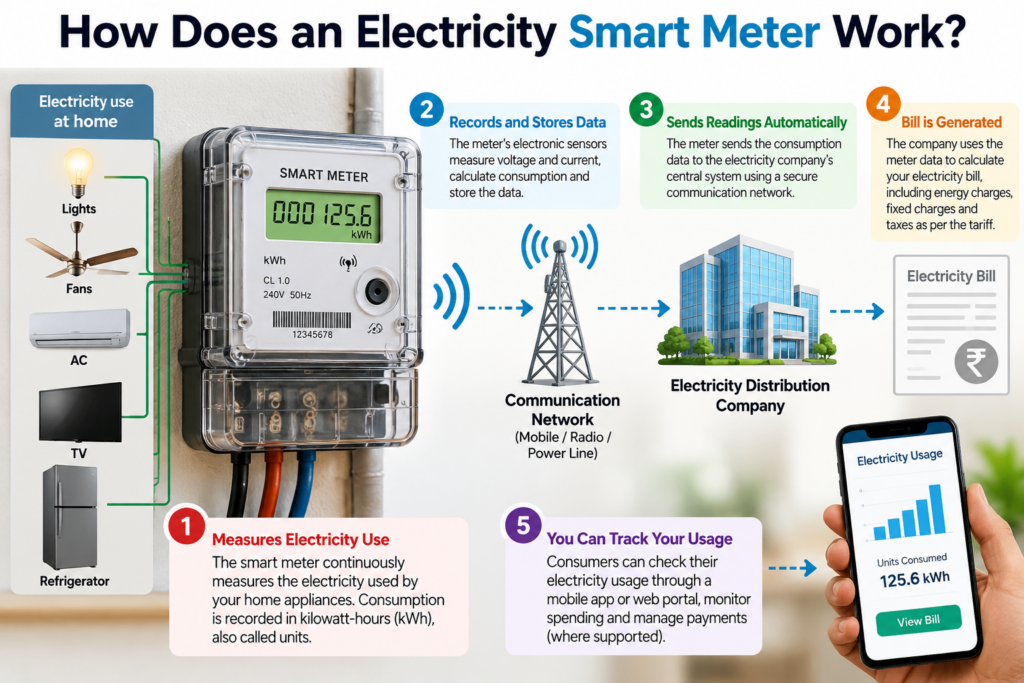
Have you ever wondered how your electricity bill is calculated without anyone visiting your home to note the meter reading? The answer increasingly lies in an electricity smart meter—a digital device that measures power consumption and can communicate readings directly to the electricity distribution company.
Unlike traditional electricity meters, which generally require manual reading, smart meters combine digital measurement with communication technology to make electricity monitoring more efficient.
1. Measuring Electricity Consumption
Every time you switch on a fan, run an air conditioner or charge your phone, electricity flows through your home’s wiring. A smart meter continuously measures the electricity consumed by connected appliances.
Electricity consumption is recorded in kilowatt-hours (kWh), commonly known as units. One unit represents the consumption of 1,000 watts of power for one hour.
For example, a 1,000-watt appliance running for one hour consumes approximately one unit of electricity.
2. Recording and Storing Data
The meter’s electronic sensors measure electrical parameters, including voltage and current, to calculate energy consumption. Its internal processor records the readings and stores relevant data.
Depending on the meter and its configuration, it may also record consumption at different times of the day. This can help electricity providers understand demand patterns and offer time-based tariffs where applicable.
3. Sending Readings Automatically
One of the biggest advantages of a smart meter is its ability to communicate remotely.
Using supported communication technologies—such as cellular networks, radio-frequency systems or power-line communication—the meter sends consumption data to the electricity distribution company’s central system.
This means readings can often be collected without a meter reader visiting the property. The frequency of data transmission depends on the meter, network and utility’s configuration.
4. How Does the Electricity Bill Get Generated?
Once the readings reach the distribution company’s billing system, the recorded consumption is used to calculate the electricity charges.
The final bill may include energy charges, fixed charges, applicable taxes and other regulated components, depending on the tariff and local rules.
Smart meters can reduce reliance on estimated readings, although billing accuracy still depends on correct meter configuration, reliable data transmission and proper billing-system processing.
5. Can Consumers Track Their Usage?
Many smart-meter programmes provide access to consumption information through a mobile app, web portal or other customer service channels.
Consumers may be able to check their electricity usage, monitor spending and identify periods of unusually high consumption. Some systems also support prepaid balances, recharge facilities and remote connection or disconnection, subject to the utility’s policies and applicable regulations.
These features can encourage households to manage their electricity consumption more carefully.
6. How Do Smart Meters Benefit Electricity Companies?
Smart meters help distribution companies collect readings more efficiently, identify certain abnormal consumption patterns, improve demand forecasting and reduce some operational costs.
Depending on the system’s capabilities, they may also help detect outages and investigate suspected meter tampering. However, a smart meter does not automatically eliminate electricity theft or guarantee uninterrupted supply.
The Business Behind Smart Meters
Smart meters are creating opportunities for manufacturers, communication technology providers, software developers and companies that install and maintain metering infrastructure.
For electricity distribution companies, the technology can improve operational efficiency and billing processes. For consumers, it offers better visibility into electricity usage and, where supported, more convenient ways to manage payments.
The bottom line: An electricity smart meter does more than count units. It connects digital measurement with communication and data systems, helping consumers and electricity providers understand and manage power consumption more effectively.
Note: We seek Sponsors for this column. Please connect with us at infobilkul@gmail.com