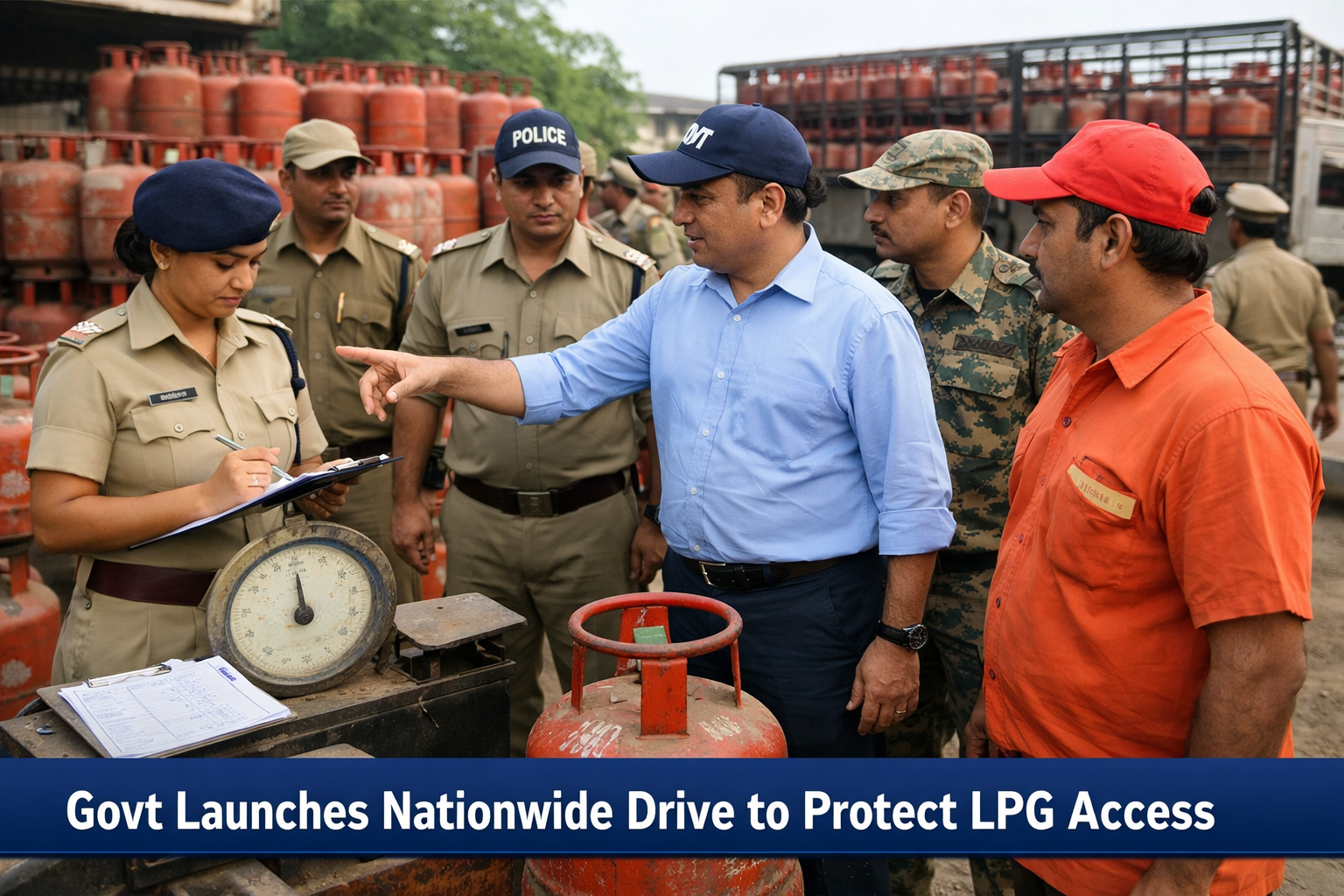
Govt Launches Nationwide Drive to Protect LPG Access
Through a nationwide implementation campaign, the government ensured that consumers had access to LPG
Bilkul Bazaar
Ahmedabad | 14 April 2026
The Government of India has significantly strengthened its enforcement framework to curb hoarding and black marketing of LPG, further strengthening its commitment to ensure uninterrupted access to clean cooking fuel to genuine consumers across the country.
As part of a coordinated nationwide campaign, more than 2,700 inspections and raids were conducted on April 11, 2026 alone. The objective of this targeted enforcement action is to detect irregularities, prevent domestic LPG from going astray, and increase transparency in the distribution network.
Along with this, public sector oil marketing companies (OMCs) have also intensified surveillance through spot checks on LPG distributorships. Following these stringent checks, fines have been imposed on 219 distributorships till now for violating the prescribed norms, while 56 distributorships have been suspended.
Along with this, OMC has also expanded its consumer outreach and awareness efforts to promote responsible consumption of LPG and ensure that LPG supply reaches the end consumers. In the last eight days, around 3,300 awareness camps have been organized, with a special focus on the availability and usage of 5 kg Free Trade LPG (FTL) cylinders, and over 35,800 such cylinders have been sold during this campaign. Such initiatives are helping to meet the needs of the displaced and underprivileged and at the same time, reducing the pressure on domestic LPG supply.
Such implementation and outreach measures have been supported by India’s robust and resilient LPG distribution system. Domestic supply remains stable and there have been no reports of stock-outs anywhere at the distributorship. On April 11, 2026 alone, over 52.3 lakh domestic LPG cylinders were delivered across the country, demonstrating the system’s ability to maintain uninterrupted supply even amidst changing global conditions.
The government’s proactive and no-nonsense approach indicates its continued emphasis on consumer protection, system integrity, and equitable access to essential energy resources.
The government ensured availability of LPG to consumers through a nationwide campaign
Government of India has strengthened its system to curb LPG hoarding and black market. Also, the government has reiterated its commitment to uninterrupted supply of clean fuel to genuine consumers across the country.
As part of a nationwide campaign, more than 2,700 inspections and raids were conducted on April 11, 2026 alone. Such actions are aimed at detecting irregularities, preventing misuse of domestic LPG and increasing transparency in the distribution network.
Meanwhile, public sector oil marketing companies (OMCs) have also stepped up their vigilance with surprise inspections of LPG distributorships. Following these stringent inspections, 219 distributors have been fined, while the licenses of 56 distributors have been suspended for violating the set rules.
OMCs have also stepped up efforts to promote responsible consumption and ensure last-mile access and create consumer awareness. About 3,300 awareness camps have been organized in the last eight days, specifically emphasizing the availability and adoption of 5 kg ‘Free Trade LPG’ (FTL) cylinders; Over 35,800 such cylinders were sold during these campaigns. All these efforts are proving helpful in meeting the needs of the migrant and underprivileged population and also reducing the pressure on domestic LPG supply.
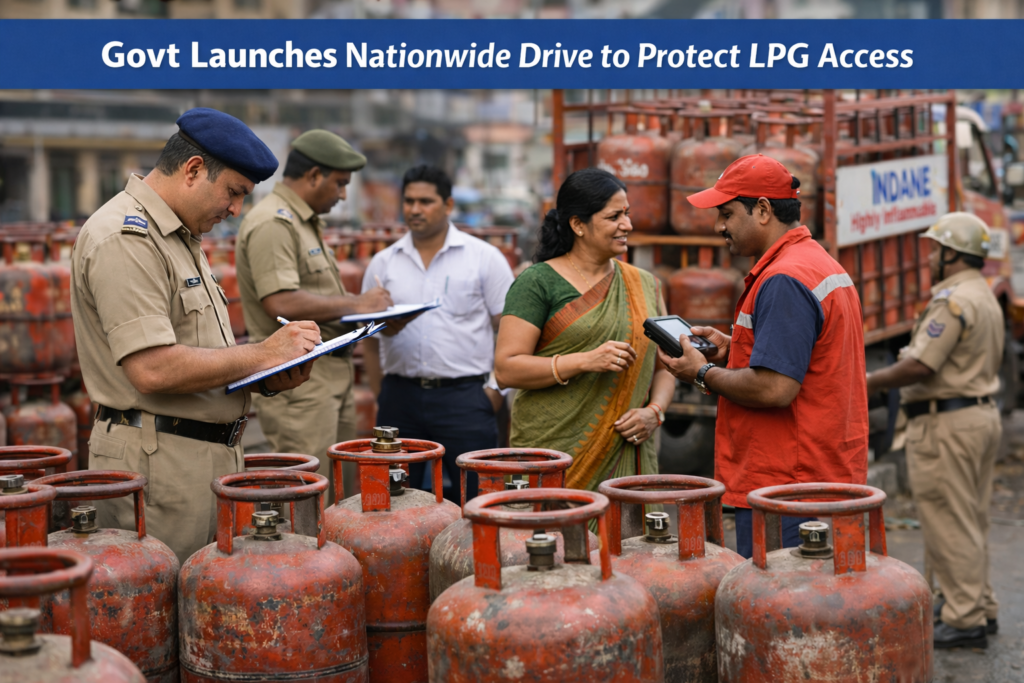
These monitoring and awareness measures strengthen India’s LPG distribution system. Domestic supply remains stable, and there have been no reports of LPG shortages (out of stock) at any distributor. On April 11, 2026 alone, more than 52.3 lakh domestic LPG cylinders were supplied across the country; This figure reflects the ability to maintain uninterrupted supply despite changing conditions around the world.
The government’s proactive and zero-tolerance approach reaffirms its commitment to ensuring consumer safety, system integrity and equitable access to essential energy resources.
Government Safeguards LPG Access for Consumers with Nationwide Enforcement Drive
The Government of India has significantly strengthened its enforcement framework to curb hoarding and black marketing of LPG, reinforcing its commitment to ensuring uninterrupted access to clean cooking fuel for genuine consumers across the country.
As part of a coordinated nationwide drive, more than 2,700 inspections and raids were conducted on April 11, 2026 alone. These targeted enforcement actions are aimed at detecting irregularities, preventing diversion of domestic LPG, and enhancing transparency across the distribution network.
Public Sector Oil Marketing Companies (OMCs) have simultaneously intensified surveillance through surprise inspections at LPG distributorships. Following these stringent checks, penalties have been imposed on 219 distributorships, while 56 distributorships have been suspended so far for violations of prescribed norms.
In parallel, OMCs have also scaled up consumer outreach and awareness efforts to promote responsible usage and ensure last-mile accessibility. Around 3,300 awareness camps have been organized over the past eight days, particularly focusing on the availability and adoption of 5 kg Free Trade LPG (FTL) cylinders, with over 35,800 such cylinders sold during these drives. These initiatives are helping address the needs of migrant and underserved populations while reducing pressure on domestic LPG supply.
These enforcement and outreach measures are underpinned by the strength and resilience of India’s LPG distribution ecosystem. Domestic supply remains stable, with no dry-outs reported across distributorships. On April 11, 2026 alone, more than 52.3 lakh domestic LPG cylinders were delivered nationwide, reflecting the system’s ability to maintain seamless supply even amid evolving global conditions.
The Government’s proactive and zero-tolerance approach underscores its continued focus on consumer protection, system integrity, and equitable access to essential energy resources.