HOW IT WORKS: CREDIT CARDS
Bilkul Bazaar Weekly Special
You tap, swipe or enter a number — but what happens behind the scenes?
A credit card allows you to buy something today and pay for it later. Unlike a debit card, which generally uses money already available in your bank account, a credit card gives you access to a pre-approved line of credit from the card issuer.
But how does that simple tap at a shop actually work?
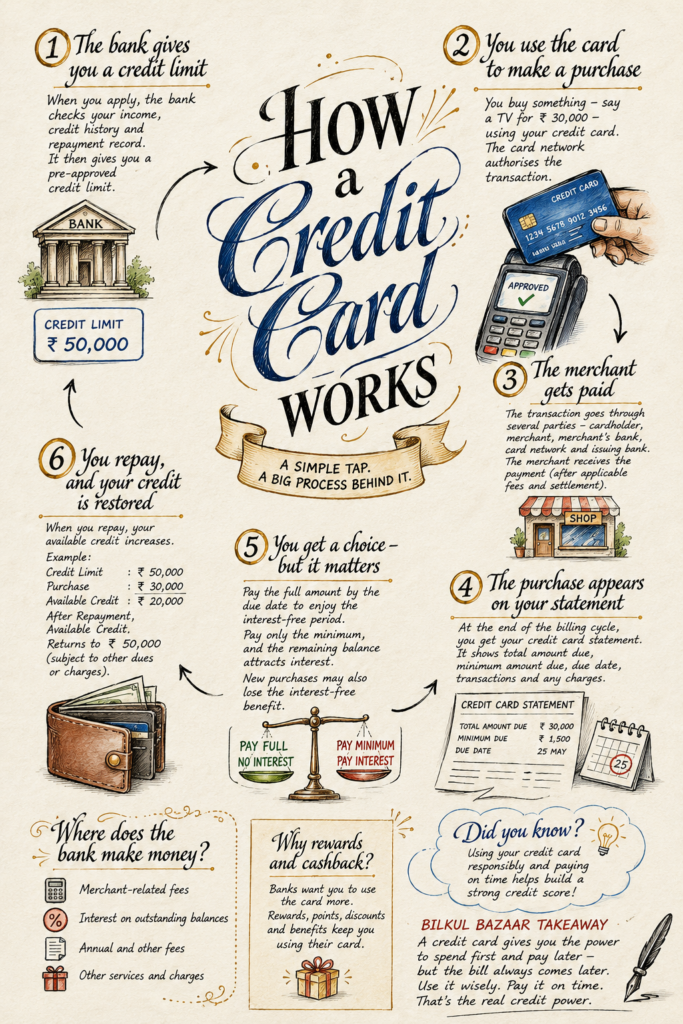
1. The bank gives you a credit limit
When you apply for a credit card, the issuing bank or financial institution assesses factors such as your income, credit history and repayment record.
Based on this assessment, it assigns you a credit limit — say ₹50,000.
This means you can generally make eligible purchases up to that outstanding limit, subject to the card’s terms and available credit.
2. You use the card to make a purchase
Suppose you buy a television worth ₹30,000 using your credit card.
You do not immediately pay the merchant from your bank account.
Instead, the card transaction is authorised through a payment network such as Visa, Mastercard or RuPay, while your card issuer approves the transaction based on your available credit and other checks.
3. The merchant gets paid
The transaction does not simply move money directly from your card to the shopkeeper.
Several parties can be involved — the cardholder, merchant, merchant’s bank, card network and card-issuing bank.
The payment network helps route the transaction between the relevant institutions. The merchant ultimately receives the payment, after applicable fees and settlement processes.
4. The purchase appears on your credit-card bill
Your ₹30,000 purchase becomes part of your outstanding credit-card balance.
At the end of the billing cycle, the bank generates your credit-card statement.
The statement normally shows:
- Total amount due
- Minimum amount due
- Payment due date
- Individual transactions
- Applicable fees, interest or other charges
5. You get a choice — but it matters
This is where credit cards become particularly important.
If you pay the full statement balance by the due date, purchases may generally qualify for the card’s interest-free period, subject to the card’s terms and conditions.
If you pay only the minimum amount due, the remaining balance can attract interest. New purchases may also lose the benefit of the interest-free period, depending on the issuer’s terms.
So, a credit card is not free money. It is short-term credit that has to be repaid.
6. What happens when you repay?
When you repay the amount, your available credit generally increases again.
For example:
Credit limit: ₹50,000
Purchase: ₹30,000
Available credit: ₹20,000
After repaying ₹30,000, your available credit can return to ₹50,000, subject to the issuer’s processing and any other outstanding transactions or charges.
Where does the credit-card company make money?
Credit-card businesses can earn revenue from several sources, including:
Merchant-related fees: Merchants’ acquiring arrangements can involve fees associated with card transactions.
Interest: If cardholders carry balances and interest is charged under the card’s terms, this can be a major source of revenue for issuers.
Annual or other fees: Some cards charge annual, renewal or other fees.
Other services and charges: Depending on the card, additional charges may apply for certain transactions or services.
Why do banks offer rewards and cashback?
Credit-card companies want customers to use their cards regularly.
That is why cards may offer cashback, reward points, discounts, travel benefits or other incentives.
The economics behind these benefits can involve a combination of transaction-related revenue, fees, interest income and customer acquisition strategies.
Why does your credit score matter?
How you use a credit card can affect your credit history.
Regularly paying dues on time and managing credit responsibly can help build a positive credit profile. Consistently missing payments or carrying excessive debt can hurt your creditworthiness.
That is why a credit card can be both a financial convenience and a financial responsibility.
BILKUL BAZAAR TAKEAWAY
A credit card is essentially a payment tool built on a credit relationship. Behind one simple tap is an ecosystem connecting consumers, merchants, banks and payment networks.
Used responsibly, it can provide convenience, rewards and access to short-term credit. Used carelessly, it can turn into expensive debt.
The simple rule: A credit card gives you the power to spend first and pay later — but the bill always comes later.