
How It Works – Thermometer
Bilkul Bazaar Weekly Special
How Does a Thermometer Work?
A thermometer is a device that measures temperature. It tells us how hot or cold something is by responding to changes in heat.
1. Heat Changes the Material
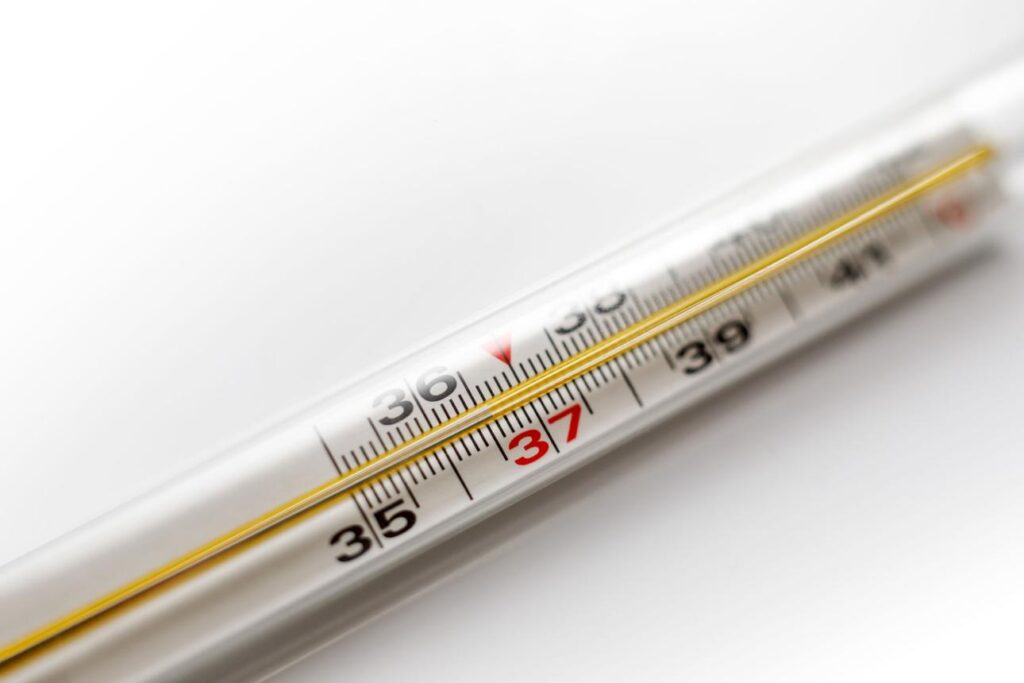
Every thermometer contains a material that reacts to temperature. As the temperature rises, the material expands. When it falls, the material contracts.
2. The Reading Appears
The thermometer converts this expansion or contraction into a temperature reading, shown in degrees Celsius (°C) or Fahrenheit (°F).
Types of Thermometers
Glass Thermometer
Older glass thermometers used mercury or colored alcohol. When heated, the liquid expands and rises inside a thin glass tube. As it cools, the liquid falls.
Digital Thermometer
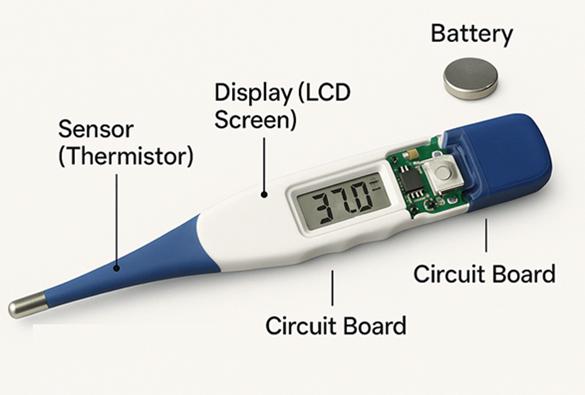
Digital thermometers use an electronic sensor called a thermistor. The sensor’s electrical resistance changes with temperature. A tiny computer inside converts this change into a digital reading displayed on the screen.
Infrared Thermometer
Infrared thermometers don’t need to touch the object. They detect the infrared heat energy naturally emitted by a person’s body or any object and instantly calculate the temperature.
Why Do We Use Thermometers?
- To check body temperature during illness.
- To monitor weather conditions.
- To measure cooking temperatures.
- To ensure medicines and vaccines are stored safely.
- To monitor industrial processes and laboratory experiments.
Did You Know?
- The first practical mercury thermometer was invented by Daniel Gabriel Fahrenheit in 1714.
- Mercury thermometers are now being replaced because mercury is toxic if the glass breaks.
- Digital thermometers can provide a reading in as little as 10–30 seconds.
- The coldest temperature ever recorded on Earth was −89.2°C at Antarctica’s Vostok Station.
- Modern infrared thermometers can measure temperature from several feet away without touching the object.
In Simple Words
Think of a thermometer as a heat detective. It senses changes in temperature and converts them into numbers that we can easily read, helping us know whether something is hot, cold, or just right.
We seek Sponsors for this column. Please connect with us at infobilkul@gmail.com