
The Business Behind – Fat Indian Weddings
Bilkul Bazaar | Sunday Special
An Industry Built on Celebrations
Indian weddings are celebrations of love, family and tradition. But behind the music, colourful decorations, elaborate meals and beautiful outfits lies a vast business ecosystem that supports millions of livelihoods. From wedding venues and caterers to jewellers, designers, photographers and travel operators, weddings create opportunities for businesses of every size.
What appears to be a few days of celebration often involves months of planning, multiple service providers and substantial spending. This makes the Indian wedding industry an interesting example of how culture and commerce come together.
The Big Business of Weddings
A wedding is rarely a single transaction. It is a collection of purchases and services brought together for one occasion. Families may book banquet halls, hotels, resorts or farmhouses, arrange catering, purchase jewellery and clothing, hire photographers and organise entertainment.
Each decision creates business for a different set of suppliers. A large wedding may involve dozens of vendors, while even a modest ceremony supports local shops and service providers.
The scale of spending varies considerably depending on the family’s budget, location, guest list and customs. Nevertheless, the industry serves customers across a wide range of income groups, from simple family gatherings to elaborate destination celebrations.
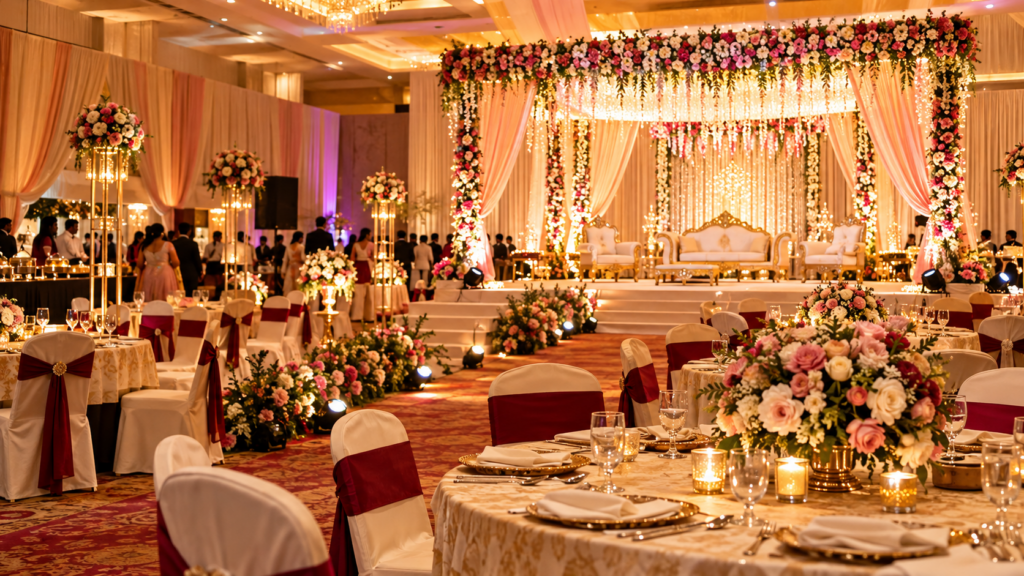
The Businesses Behind the Celebration
Venues and hospitality: Banquet halls, hotels, resorts and marriage gardens earn revenue through venue bookings, accommodation, food packages and additional services. Wedding dates during popular seasons can be particularly important for their business.
Food and catering: Food is central to many Indian weddings. Caterers, sweet shops, bakeries, beverage suppliers and specialist food vendors benefit from the demand. Large functions may require extensive staffing, kitchen facilities, transportation and inventory planning.
Clothing and jewellery: Wedding outfits, sarees, lehengas, sherwanis and accessories generate sales for retailers, designers and manufacturers. Jewellery businesses also benefit from purchases of gold, diamonds and other ornaments, although spending depends on household budgets and prevailing prices.
Decoration and event management: Flowers, lighting, stage design, furniture, sound systems and themed decorations create opportunities for event planners and specialist vendors. Professional organisers help coordinate multiple suppliers and manage the event schedule.
Photography and entertainment: Photographers, videographers, makeup artists, musicians, DJs and performers provide services that have become important parts of wedding celebrations. Digital albums, cinematic videos and social media content have also expanded the range of services offered.
Travel and related services: Destination weddings create demand for hotels, airlines, buses, taxis, tour operators and local hospitality businesses. Even weddings held close to home can generate spending on guest accommodation and transportation.
Where Does the Money Go?
Wedding expenditure is distributed across products, services and experiences. A family’s budget may cover venue rental, meals, clothing, jewellery, decorations, photography, gifts and travel.
However, the amount paid by a customer is not the same as the profit earned by a business. A caterer, for instance, must pay for ingredients, kitchen staff, transport, equipment and other operating costs. A venue must cover maintenance, utilities, employees and property expenses.
The businesses that manage costs, maintain service quality and plan their resources efficiently are better positioned to earn sustainable profits.
Weddings also involve advance payments and seasonal cash flows. Vendors may need to purchase materials and hire temporary workers before receiving their final payments. Managing working capital is therefore an important part of running a wedding-related business.
Small Businesses, Big Opportunities
The wedding economy is not limited to large hotels and established brands. Local florists, tailors, invitation printers, mehndi artists, sweet makers, decorators and independent photographers can all find opportunities in this market.
Many businesses operate through referrals and repeat relationships. A satisfied customer may recommend a caterer or photographer to relatives and friends, helping the vendor secure future bookings.
Digital platforms and social media have also changed how customers discover suppliers. Businesses can showcase previous work, publish packages, receive enquiries and communicate directly with prospective clients without necessarily maintaining a large showroom or office.
For entrepreneurs, specialised services can offer an entry point into the industry. Examples include wedding invitation design, customised return gifts, sustainable decorations, guest transport coordination and online event planning.
The Changing Wedding Economy
Wedding preferences are evolving. Some families are choosing smaller ceremonies, while others are spending more on destination celebrations, personalised experiences or professional event management.
Social media has increased the visibility of wedding photography, elaborate decor and customised themes. At the same time, budget-conscious customers continue to look for transparent pricing, flexible packages and value for money.
This creates opportunities for businesses that can serve clearly defined customer needs. A small vendor specialising in intimate weddings, for example, may compete through personal attention and flexible services rather than the scale of a large event company.
Technology is also making coordination easier through digital invitations, online guest management, virtual consultations and planning tools.
Challenges Behind the Celebration
The industry faces several practical challenges. Demand is seasonal, competition can be intense, and customer expectations are often high. Rising prices of food, flowers, fuel, jewellery and other inputs can affect costs and margins.
Last-minute changes, weather disruptions and coordination failures can also create financial and operational difficulties. Businesses must balance attractive packages with realistic pricing to avoid accepting work that generates little profit.
Another challenge is the need to maintain quality while handling several events during busy periods. Reliable suppliers, trained workers, clear contracts and careful scheduling can make a significant difference.
The Road Ahead
Indian weddings demonstrate how a social tradition can support a diverse commercial ecosystem. The industry brings together hospitality, retail, food services, transportation, entertainment and creative professions.
For established businesses, weddings can be an important source of seasonal revenue. For smaller entrepreneurs, they can provide opportunities to build specialised services and grow through recommendations and digital visibility.
Ultimately, the business behind a wedding is about more than the money spent on a celebration. It is about the network of people and enterprises that turn an occasion into an experience — and make a living while doing so.