
HOW IT WORKS: How Does IPO Allotment Work
Bilkul Online | Sunday Special
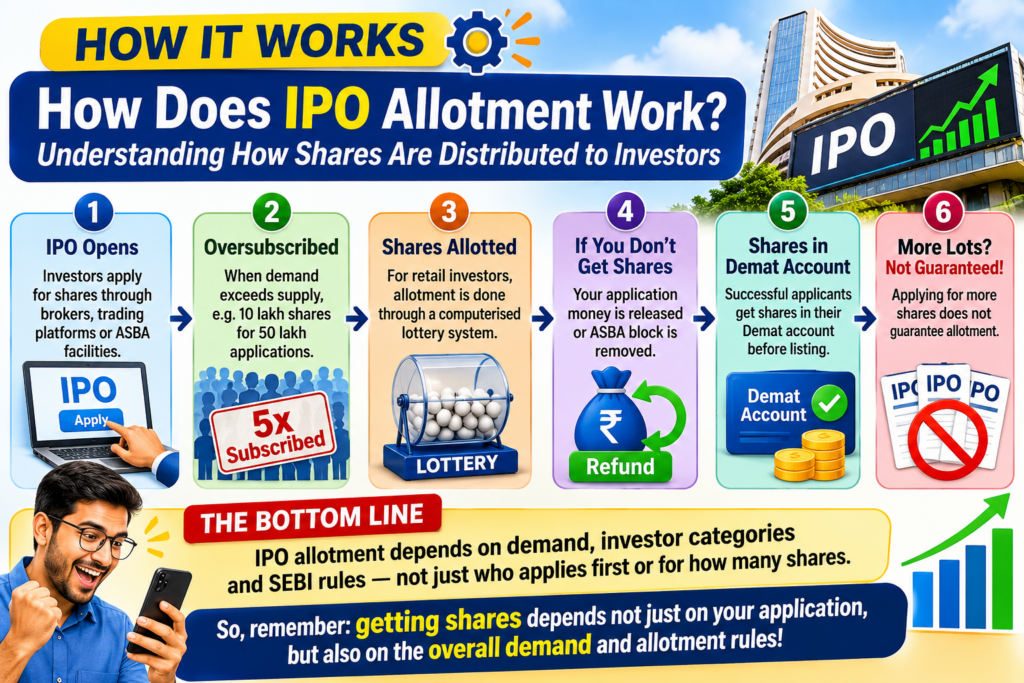
How Does IPO Allotment Work? Understanding How Shares Are Distributed to Investors
Whenever a company launches an Initial Public Offering (IPO), thousands or even millions of investors apply for its shares. But have you ever wondered how these shares are actually distributed? Why does one investor receive an allotment while another gets nothing, even after applying for the same IPO?
The answer lies in the IPO allotment process.
1. What Happens When an IPO Opens?
When a company launches an IPO, it invites investors to apply for its shares within a specified period. Investors can submit applications through their brokers, trading platforms or bank-supported ASBA facilities.
Each application specifies the number of shares an investor wishes to purchase and the price, where applicable.
2. What Happens When an IPO Is Oversubscribed?
An IPO is called oversubscribed when the demand for shares exceeds the number of shares offered.
For example, if a company offers 10 lakh shares but receives applications for 50 lakh shares, the IPO is subscribed five times.
Since there are more applicants than available shares, everyone cannot receive the shares they requested.
3. How Are Shares Allotted?
The allotment process depends on the investor category.
For retail individual investors, when an IPO is heavily oversubscribed, allotment is generally conducted through a computerised lottery system designed to provide eligible applicants an equal chance of receiving at least one lot.
For larger investor categories, allotment follows different rules prescribed by SEBI.
4. What Happens If You Don’t Get Shares?
If an investor does not receive an allotment, the blocked application money is released or the relevant ASBA block is removed.
If shares are allotted, the money corresponding to the allotted shares is debited from the investor’s account.
5. When Do Shares Appear in Your Demat Account?
After the allotment is finalised, shares are credited to successful applicants’ Demat accounts before the scheduled listing date.
Investors can then trade their shares once the stock is listed on the stock exchange.
6. Does Applying for More Lots Guarantee Allotment?
No. Applying for more shares does not guarantee allotment.
In an oversubscribed retail category, allotment is generally structured around the minimum bid lot and the number of eligible applicants. Therefore, applying for multiple lots does not necessarily increase an investor’s chances of receiving shares.
THE BOTTOM LINE
IPO allotment is not simply a matter of who applies first or who bids for the highest number of shares. It follows a regulated process that considers investor categories, subscription levels and applicable allotment rules.
The next time you apply for an IPO, remember that getting shares depends not just on your application but also on demand and the rules governing allotment.
Note: We seek Sponsors for this column. Please connect with us at infobilkul@gmail.com
Pingback: CAIT to hold national meet on Nov 13, seeks designated protest sites outside cities - Bilkul Bazaar