
THE BUSINESS BEHIND GOLD JEWELLERY
From Gold Mines to Showrooms: How India’s Jewellery Industry Makes Money
Bilkul Online | Sunday Special
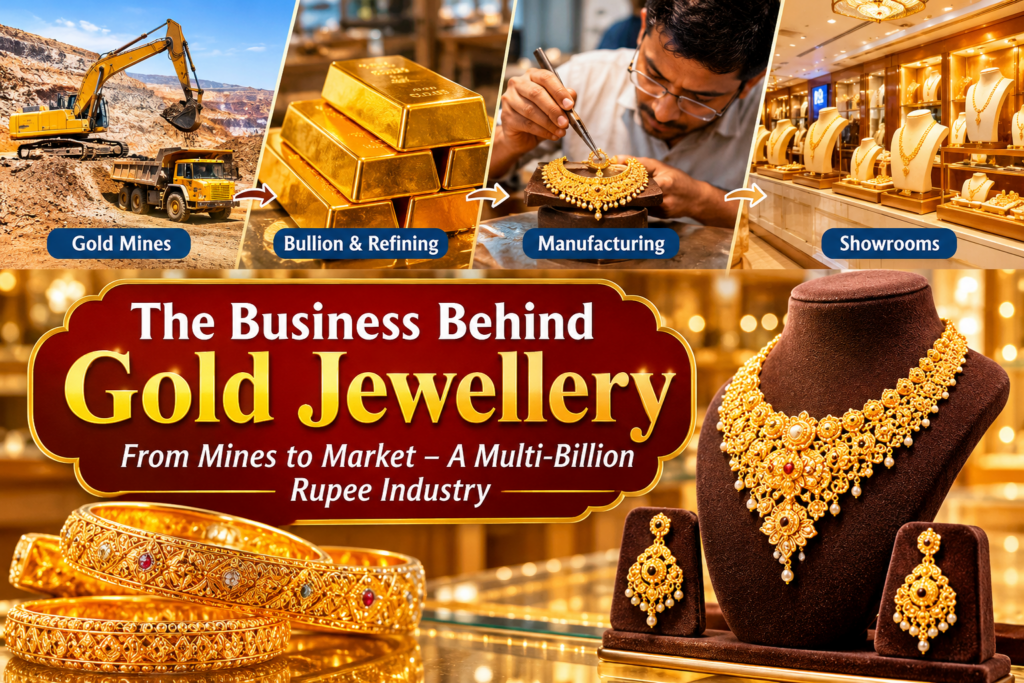
Gold jewellery is more than an ornament in India. It represents tradition, celebration, wealth and financial security. From wedding purchases to festive gifting, millions of Indians buy gold jewellery every year. But behind every necklace, ring or pair of earrings lies a large business ecosystem involving gold importers, bullion dealers, refiners, jewellery manufacturers, wholesalers and retailers.
India is one of the world’s largest consumers of gold. A significant portion of the country’s gold demand comes from jewellery, making the sector an important part of the Indian economy.
Where does the gold come from?
India imports a substantial portion of the gold it consumes. International bullion markets, particularly those in London and other major trading centres, influence the price at which gold is purchased.
Importers bring gold into India, where it enters the domestic supply chain through bullion dealers, banks and authorised channels. Refiners and manufacturers then convert gold into bars, coins and jewellery.
The price of gold in India is influenced by international gold prices, currency exchange rates, import duties, taxes and domestic market conditions.
How does gold become jewellery?
The transformation from raw gold into an attractive piece of jewellery involves several stages.
Jewellery manufacturers purchase gold, melt it, mix it with other metals when required, and create alloys of different purities. For example, 22-carat gold contains approximately 91.67% pure gold, while 18-carat gold contains 75% pure gold.
The metal is then shaped into different designs through casting, moulding, cutting, polishing and stone-setting processes.
Traditional craftsmanship and modern technology work together in this industry. While machines help produce standardised designs at scale, skilled artisans remain essential for intricate and customised jewellery.
How do jewellery shops make money?
Many customers assume that jewellery retailers earn money simply because gold prices are high. However, the business model is more complex.
A jewellery bill generally includes:
- Gold value: Calculated according to the weight and purity of gold.
- Making charges: The cost of designing and manufacturing the jewellery.
- Wastage charges: Where applicable, an amount charged for manufacturing losses.
- Stone charges: The cost of diamonds, precious stones or other decorative materials.
- GST: Applicable taxes on the transaction.
Making charges are an important source of revenue for jewellery retailers. They can vary depending on the design, craftsmanship, manufacturing process and brand.
The retailer’s actual profit is not the same as the total making charge. Operating expenses, employee salaries, rent, inventory financing, marketing and other costs must also be considered.
Why do jewellery brands focus on making charges?
Gold is a commodity whose market price changes regularly. Retailers have limited control over the international price of gold.
However, they can differentiate themselves through design, craftsmanship, branding, customer experience and manufacturing efficiency.
This is why branded jewellery companies focus heavily on exclusive collections, lightweight jewellery, wedding ranges and innovative designs. These products help create customer loyalty and provide opportunities for better margins.
The importance of old gold exchange
Another interesting part of the jewellery business is the exchange of old gold.
Customers frequently exchange old ornaments for new designs. Jewellery retailers assess the purity and weight of the old gold and calculate its value before adjusting the amount against a new purchase.
This creates repeat business and helps retailers maintain customer relationships.
Why hallmarking matters
Trust is extremely important in the gold jewellery business. Customers want assurance that the jewellery they purchase contains the stated quantity of gold.
The Bureau of Indian Standards (BIS) hallmarking system helps establish the purity of gold jewellery. Hallmarked gold jewellery carries identification details, including the BIS mark, purity grade and a six-digit Hallmark Unique Identification (HUID) number.
Hallmarking has strengthened consumer confidence and brought greater transparency to the organised jewellery market.
A growing and competitive industry
India’s jewellery industry includes large listed companies, national jewellery chains, regional brands and thousands of independent family-run businesses.
Companies such as Titan’s Tanishq, Kalyan Jewellers, Malabar Gold & Diamonds and PC Jeweller have built strong market identities through retail expansion, branding and product innovation.
The industry is also changing with the growing popularity of lightweight jewellery, online jewellery shopping, lab-grown diamonds and digital gold products.
The bigger business picture
Gold jewellery is an unusual business because it combines a globally traded commodity with craftsmanship, fashion, tradition and retail services.
A jewellery showroom is not merely selling gold. It is selling design, trust, convenience, quality assurance and an emotional connection with customers.
The next time you purchase a gold necklace or ring, remember that its price reflects much more than the value of the metal.
That is the business behind gold jewellery.
Note: We seek Sponsors for this column. Please connect with us at infobilkul@gmail.com
Pingback: Programme on new Labour Codes enhances awareness among stakeholders - Bilkul Bazaar